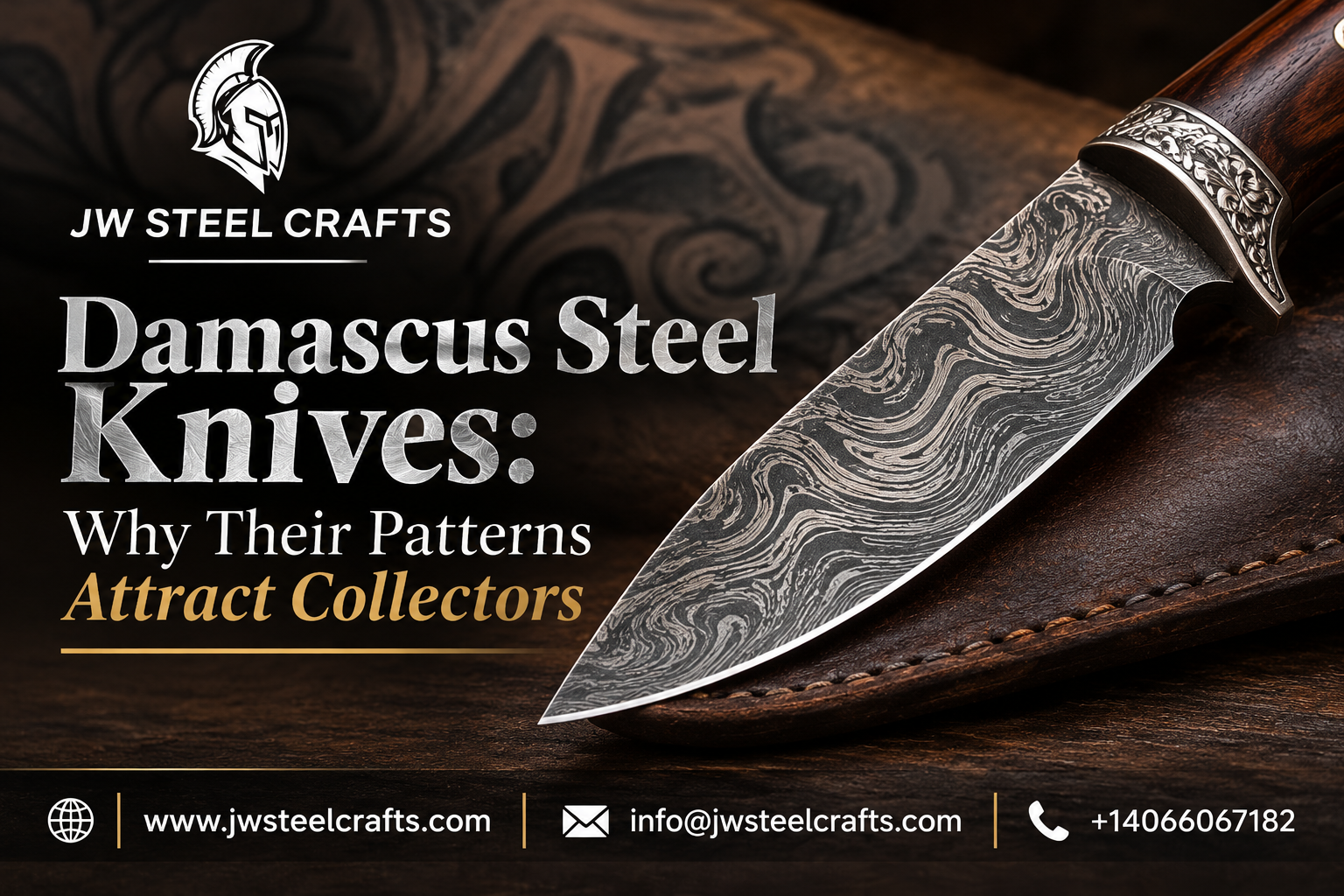
Damascus steel knives have fascinated knife enthusiasts and collectors for generations. Their distinctive flowing patterns, detailed finishes, and traditional craftsmanship make them stand out from many ordinary knife designs. Each Damascus blade can display a unique visual appearance, which adds to its appeal among people who appreciate handmade products and traditional metalworking.
Collectors often look beyond a knife’s basic functionality. They consider its steel composition, blade pattern, handle materials, finishing, and overall craftsmanship. Damascus steel brings these elements together, creating knives that can serve as both practical tools and collectible pieces.
If you are interested in handmade blades, JW Steel Crafts is a brand worth exploring for its range of handmade knife designs and traditional craftsmanship.
What Is Damascus Steel?
Damascus steel is commonly associated with metal that displays distinctive layered or flowing patterns across its surface. Modern patterned Damascus steel is generally produced by forge-welding different layers of steel and manipulating them to create decorative designs.
During production, blacksmiths can twist, fold, or otherwise work the layered material to create different patterns. The finished blade is then ground, polished, and often etched to reveal its visual details.
Traditional Damascus steel from historical periods is a separate metallurgical subject. Modern patterned Damascus should not automatically be considered identical to historical wootz steel.
The visual result is one of the main reasons collectors appreciate these knives. Depending on the manufacturing process, patterns may resemble flowing water, waves, twisting lines, or circular shapes.
Why Damascus Steel Knife Patterns Attract Collectors
The patterns found on Damascus steel blades are among their most recognizable features. However, collectors appreciate more than just appearance.
Several factors contribute to the popularity of these knives.
1. Every Pattern Offers a Distinctive Appearance
One of the biggest attractions of Damascus steel is its visual variety. The layered construction allows makers to produce different decorative patterns.
Common pattern styles include:
- Twist pattern: Creates flowing lines through twisted layers of steel.
- Ladder pattern: Produces repeated horizontal or ladder-like markings.
- Raindrop pattern: Features circular marks across the blade surface.
- Random pattern: Creates an irregular arrangement of flowing lines.
- Feather pattern: Produces a more complex design resembling feather-like shapes.
These patterns give collectors different styles to explore. Even knives made with similar techniques can have different visual characteristics.
2. Traditional Metalworking Adds Collector Appeal
Damascus steel represents an interesting combination of material science and traditional metalworking.
Creating patterned Damascus requires more than simply placing different metals together. The process involves preparing the steel, forge welding, shaping, grinding, and finishing the material.
The maker’s experience can influence the final appearance. Factors such as layer arrangement, manipulation techniques, and finishing methods all contribute to the result.
Collectors who appreciate traditional craftsmanship often find this production process particularly interesting.
3. Handmade Damascus Knives Can Have Individual Character
Handmade Damascus knives may include individual finishing details that distinguish them from mass-produced designs.
The blade pattern, handle material, decorative fittings, and overall proportions can create a distinctive appearance.
Some collectors prefer traditional hunting knife designs, while others look for decorative Bowie knives, folding knives, or other handmade styles.
The appeal often comes from finding a design that complements their existing collection.
4. Handle Materials Enhance the Overall Design
The blade pattern is important, but the handle also contributes to a knife’s collectible appearance.
Depending on the design, Damascus knives may feature:
- Natural wood handles
- Rosewood handles
- Bone or horn handles
- Micarta handles
- Synthetic handle materials
- Decorative metal fittings
Natural materials can provide a traditional appearance, while modern synthetic options offer additional design possibilities.
Collectors often compare handle colors, textures, finishing, and construction when selecting a Damascus knife.
5. Damascus Patterns Create Interesting Display Pieces
Many collectors enjoy displaying their knives as part of a personal collection. A Damascus blade can attract attention because of its layered appearance and decorative finish.
A collection may include several pattern styles, different blade profiles, or knives from different makers.
When displaying collectible knives, use suitable stands or protective storage designed for the individual product. Keep blades secured and away from children or unauthorized access.
Popular Types of Damascus Steel Knives Among Collectors
Damascus steel appears in several knife categories. Each type offers a different design and may appeal to a particular group of collectors.
Damascus Hunting Knives
Damascus hunting knives often combine traditional outdoor knife designs with decorative blade patterns. Collectors may appreciate their blade shapes, handle materials, and craftsmanship.
When evaluating a hunting knife, examine its intended purpose, steel specifications, construction, and manufacturer’s information.
Damascus Bowie Knives
Bowie knives are known for their distinctive larger blade profiles and historical association with American knife culture.
A Damascus Bowie knife combines this recognizable style with decorative layered steel patterns. Some designs also feature detailed guards and traditional handle materials.
Damascus Folding Knives
Folding knives offer a different style for collectors who prefer compact designs. Damascus patterns can appear on folding knife blades, creating an interesting combination of traditional metalwork and folding construction.
Buyers should review the locking mechanism, dimensions, materials, and construction details of each model.
Damascus Daggers
Damascus daggers often attract collectors interested in traditional blade shapes and decorative craftsmanship.
Their appeal can come from symmetrical designs, distinctive patterns, handle materials, and detailed finishing. Buyers should also consider applicable laws and safe storage requirements.
How Damascus Steel Patterns Are Created
Understanding the manufacturing process helps explain why Damascus knives look different from ordinary steel blades.
Step 1: Selecting the Steel
The maker begins by selecting suitable steel materials. Different steels may be combined to create contrast in the finished pattern.
The specific combination depends on the intended properties and manufacturing process.
Step 2: Preparing the Layers
The selected steel pieces are arranged into a layered stack. The number of layers and their arrangement can influence the final pattern.
Step 3: Forge Welding
The steel layers are heated and forge-welded together. This creates a bonded material that can be shaped into a blade.
Proper welding is essential because defects in the layered construction can affect the finished product.
Step 4: Shaping and Pattern Development
The maker manipulates the welded material through techniques such as twisting, drawing, folding, or cutting and restacking.
These methods create different visual arrangements within the steel.
Step 5: Grinding and Finishing
The material is shaped into the desired blade profile. The maker then grinds and polishes the surface to prepare it for the finishing process.
Step 6: Etching
An appropriate etching process reveals the contrast between the different steel layers.
This final stage helps make the Damascus pattern visible across the blade surface.
How to Choose a Damascus Steel Knife for Your Collection
Choosing a Damascus knife requires more than selecting an attractive pattern. Collectors should consider several product details before purchasing.
Examine the Pattern
Look at the blade photographs and examine the pattern carefully. Consider whether you prefer twist, ladder, raindrop, or another decorative style.
Review Steel Information
Check whether the seller provides details about the steel composition and manufacturing process. Avoid assuming that every blade marketed as Damascus has the same materials or properties.
Check Construction Quality
Review the blade finish, handle fitting, guard, and other construction details. Clear product photographs and specifications can help you compare options.
Consider the Handle Design
Choose a handle material and appearance that match your preferences. Also consider the overall balance and proportions described by the manufacturer.
Compare Price and Product Details
A higher price does not automatically mean better quality. Compare the steel information, craftsmanship, materials, dimensions, and finishing before making a decision.
Buy From a Reliable Seller
Look for transparent product descriptions, clear photographs, and accessible customer support. Reliable product information makes it easier to understand exactly what you are purchasing.
Where to Find Handmade Damascus Steel Knives
Finding a suitable Damascus knife becomes easier when you can compare different designs and product specifications in one place.
JW Steel Crafts offers handmade knife designs for people interested in traditional craftsmanship and distinctive blade styles.
If you prefer exploring available products rather than waiting for a custom order, its ready-to-ship handmade knives collection provides a useful starting point.
Before ordering, review each product’s materials, dimensions, blade pattern, handle construction, and availability. These details help you choose a design that matches your collection and expectations.
Damascus Steel Knives as Gifts for Collectors
Damascus steel knives can also appeal to people searching for distinctive gifts for knife enthusiasts.
Their decorative patterns and traditional craftsmanship make them interesting options for adult collectors who appreciate handmade products.
Consider these occasions when choosing a collectible gift:
- Birthdays: Select a pattern or knife style that matches the recipient’s interests.
- Father’s Day: Consider a traditional design for an adult who enjoys knife collecting.
- Christmas: A distinctive handmade piece can make a memorable gift.
- Anniversaries: Choose a collectible that reflects the recipient’s personal interests.
- Special milestones: A carefully selected handmade knife can mark an important occasion.
Before gifting a knife, check applicable laws, age restrictions, and safe storage requirements.
How to Maintain and Protect Damascus Steel Knives
Proper care helps preserve the appearance and condition of a Damascus steel knife.
Although maintenance requirements depend on the steel composition and manufacturer’s instructions, the following practices are generally useful.
Keep the Blade Clean and Dry
Moisture and residue can cause corrosion, particularly on carbon steel. Clean the blade according to the manufacturer’s recommendations and dry it thoroughly.
Use Suitable Storage
Store collectible knives in a dry environment. Avoid prolonged exposure to moisture, humidity, and corrosive materials.
Follow Manufacturer Care Instructions
Different steel compositions and finishes may require different maintenance methods. Follow the care guidance supplied with the product.
Protect the Decorative Pattern
Avoid abrasive cleaning methods that could damage the blade’s finish or alter its appearance. Use only suitable cleaning materials.
Store Knives Securely
Use protective storage or a suitable display arrangement. Keep all blades out of reach of children and people who are not authorized to handle them.
Why Choose JW Steel Crafts for Handmade Knife Collections?
For collectors, choosing a brand with a range of handmade designs makes it easier to explore different blade styles and craftsmanship details.
JW Steel Crafts focuses on handmade knife designs and related products for people interested in traditional metalworking and collectible blades.
When exploring its collection, compare individual products based on their steel information, blade patterns, handle materials, construction, and finishing. This approach helps you select a knife based on its actual features rather than appearance alone.
Whether you are starting a collection or adding another distinctive piece, take time to review the available product information before ordering.
Frequently Asked Questions
Why are Damascus steel knives popular among collectors?
Damascus steel knives attract collectors because of their distinctive layered patterns, traditional metalworking techniques, and variety of blade and handle designs.
Are all Damascus steel patterns different?
Not necessarily. Makers can reproduce similar patterns using established techniques. However, individual blades may still have variations in their pattern arrangement and finishing.
What are the most popular Damascus steel patterns?
Common patterns include twist, ladder, raindrop, random, and feather patterns. Each offers a different visual appearance.
Is Damascus steel stronger than ordinary steel?
Not automatically. Strength, toughness, edge retention, and corrosion resistance depend on the steel composition, heat treatment, construction, and manufacturing quality.
Are handmade Damascus knives good for collections?
They can be appealing collectible items because of their decorative patterns, craftsmanship, and variety of designs. Buyers should still evaluate the actual materials and construction.
How can you identify a quality Damascus steel knife?
Review the steel composition, heat treatment information, construction, blade finish, handle fitting, and seller transparency. A decorative pattern alone is not proof of quality.
Do Damascus steel knives require special maintenance?
They may require careful cleaning and drying, especially when made with carbon steel. Always follow the manufacturer’s maintenance instructions.
Are Damascus steel knives suitable birthday gifts?
They can make distinctive gifts for adult knife collectors who appreciate traditional craftsmanship. Check local laws, age restrictions, and safe storage requirements before gifting one.
Conclusion
Damascus steel knives attract collectors because they combine distinctive blade patterns, traditional metalworking, and individual design details. Their flowing lines and layered appearance make them visually different from many ordinary knives, while their variety of blade styles and handle materials gives collectors plenty of options to explore.
However, a beautiful pattern should never be the only factor in a purchasing decision. Steel composition, heat treatment, construction, finishing, and reliable product information are equally important.
If you appreciate handmade craftsmanship and distinctive knife designs, explore JW Steel Crafts to compare its available collections. Taking time to understand each product’s features will help you choose a Damascus steel knife that deserves a place in your collection.